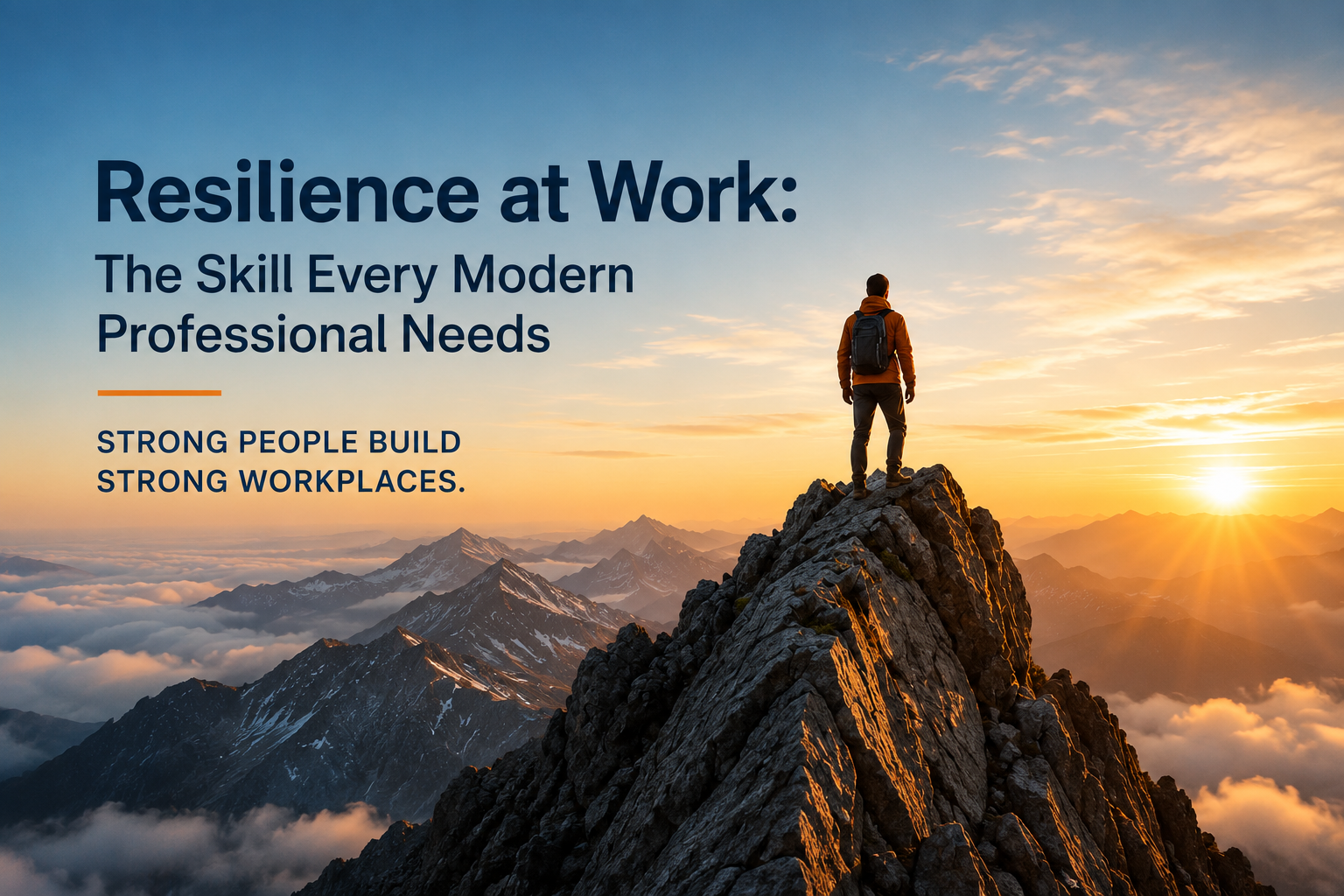
Resilience at Work: The Skill Every Modern Professional Needs
The workplace today moves fast, faster than ever. Expectations are rising, priorities are shifting, and change seems to be the only constant. In the middle of all this, one skill has quietly become a real competitive edge: resilience.
And not the “just keep pushing” kind most of us grew up believing. Real resilience is deeper. It is the ability to reset, recalibrate, and rise again, with clarity instead of chaos, and intention instead of overwhelm.
Why Resilience Matters More Than Ever
Resilience is the capacity to bounce back after setbacks, adapt to unexpected changes, and protect your well-being in the process. It has become just as crucial to organizations as communication, leadership, or innovation.
When people are resilient:
Stress feels manageable, not suffocating
Collaboration stays steady, even when pressure increases
Motivation remains consistent
Productivity improves without burning people out
Culture becomes healthier, safer, and more human
In short, resilient teams do not just survive challenges, they innovate through them.
The Human Side of Resilience
Resilience is not about being tough or pretending “I am fine.”
It is about being honest.
Honest with yourself when something feels heavy.
Honest with your team when you need support.
Honest about what is possible with the time and energy you have.
It also requires environments where people feel safe enough to speak up. That is where psychological safety comes in, a team’s comfort in being themselves, asking questions, admitting mistakes, and sharing ideas without fear.
When psychological safety is present, resilience stops being an individual effort and becomes a team advantage.
Key Practices That Build Real Resilience at Work
1. Set Healthy Boundaries
Resilience grows where boundaries are respected. That includes saying “no” when your plate is full, taking breaks without guilt, and protecting recovery
time. When leaders model boundaries, the whole team benefits.
2. Cultivate Emotional Awareness
Being aware of your emotional state helps you recognize stress signals long before burnout hits. Teams do better when conversations about mental well-
being feel normal, not taboo.
3. Develop a Growth Mindset
Setbacks are not signs of failure. They are data. When teams adopt a growth mindset, challenges feel like part of the process rather than personal
shortcomings.
4. Strengthen Connection and Support
Supportive relationships are often the strongest predictors of resilience. A quick check-in, a shared challenge, a small show of empathy, all build trust.
5. Prioritize Rest and Renewal
Resilience is not strengthened while you are exhausted. It is built in recovery. Encouraging breaks, time off, and manageable workloads leads to higher
long-term performance.
How Leaders Can Build a Resilient Culture
Resilience becomes a reality when leaders actively create the conditions for it. Effective leaders:
Encourage open, honest conversations
Model boundaries and self-care
Provide clarity in uncertain times
Recognize effort and offer meaningful feedback
Build systems that support people, not overwhelm them
Resilience is more than a leadership skill. It is a leadership responsibility.
The Outcome: Stronger People, Stronger Organizations
Companies that invest in resilience see real results:
Better engagement
Higher retention
Greater morale
Less conflict
Stronger performance and culture
Resilience does not erase challenges, but it equips people to face them with confidence, energy, and purpose.
In a world where change is constant, resilience is becoming the defining factor of teams that thrive. When people are well, teams perform better. When teams are resilient, culture strengthens. And when culture strengthens, everyone wins.